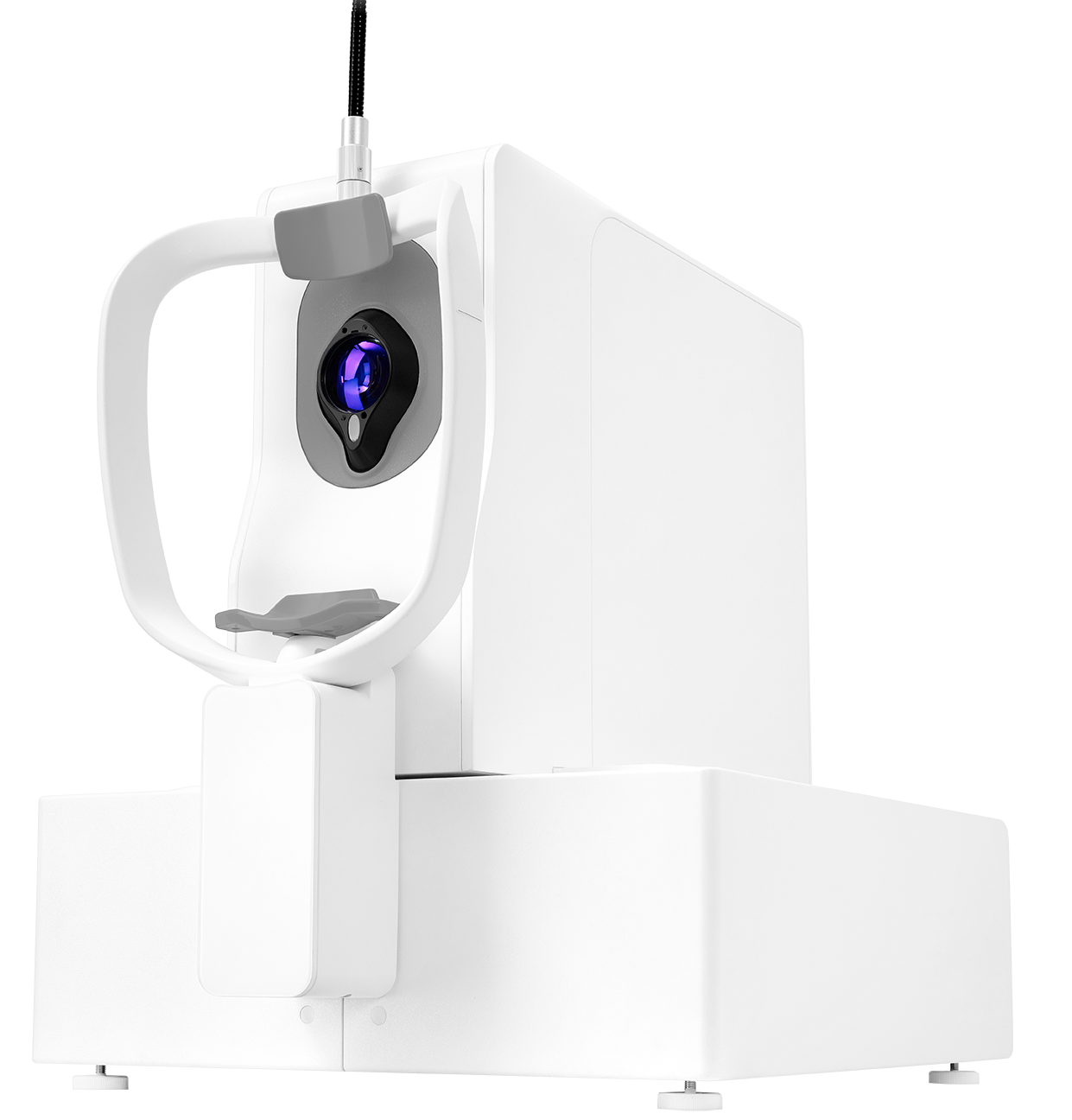
| DREAM OCT VG200C | ||
|---|---|---|
| OCT Imaging | ||
| Methodology | Swept-Source OCT | |
| OCT Central wavelength | 1030~1070 nm | |
| Scan speed | 400 kHz (400,000 Hz) | |
| Axial resolution (Optical) | 5.5 μm | |
| Lateral resolution (Optical) | 15 μm | |
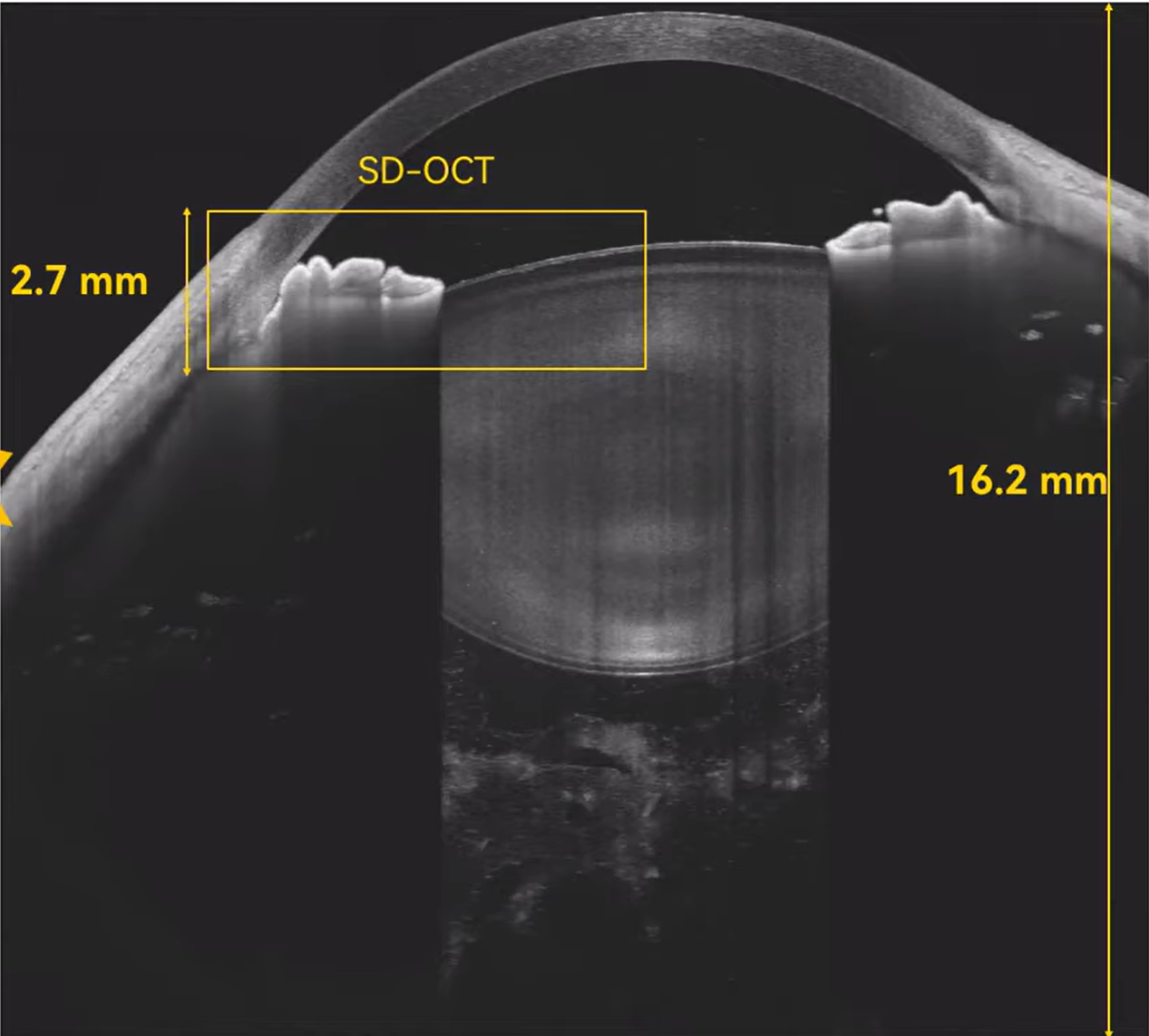
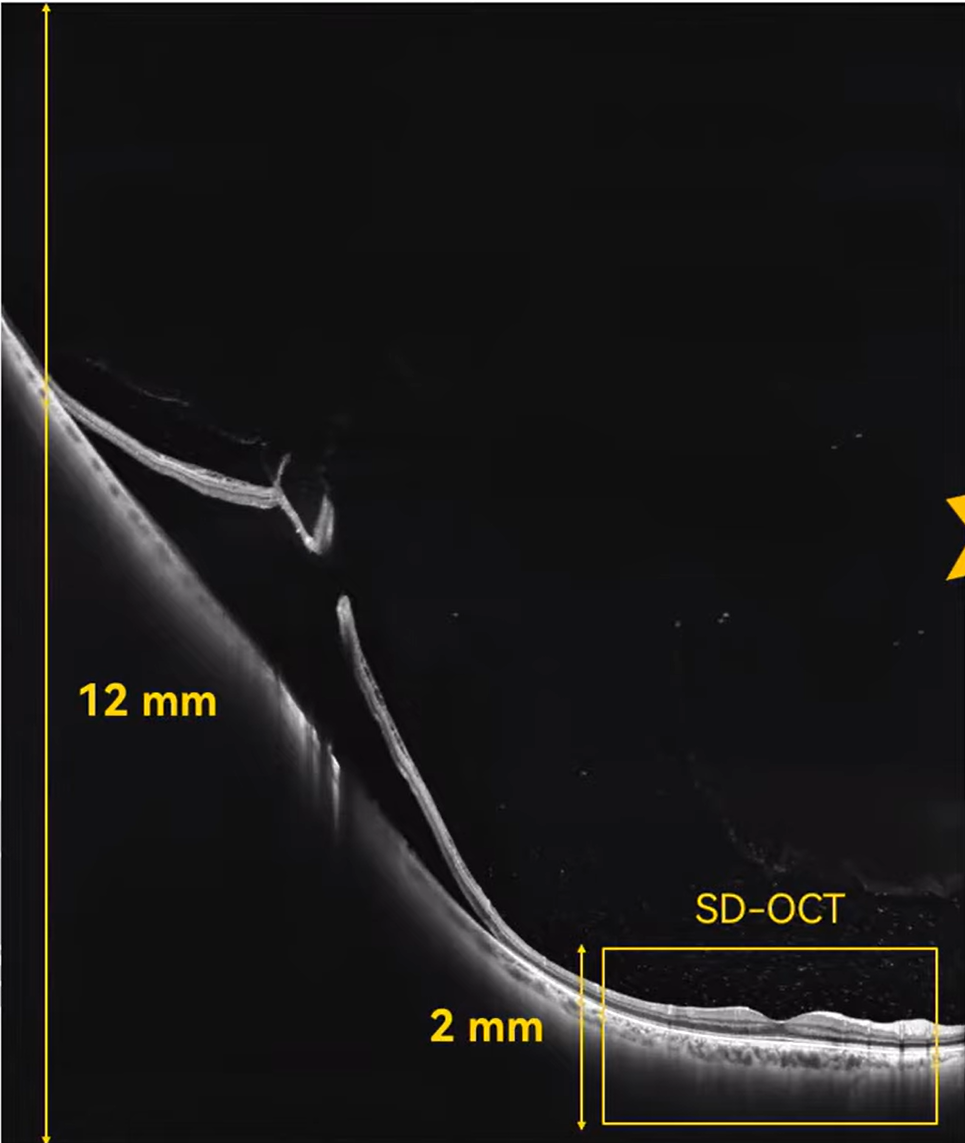
| A-scan depth | 9 mm (12.2 mm for AS) | |
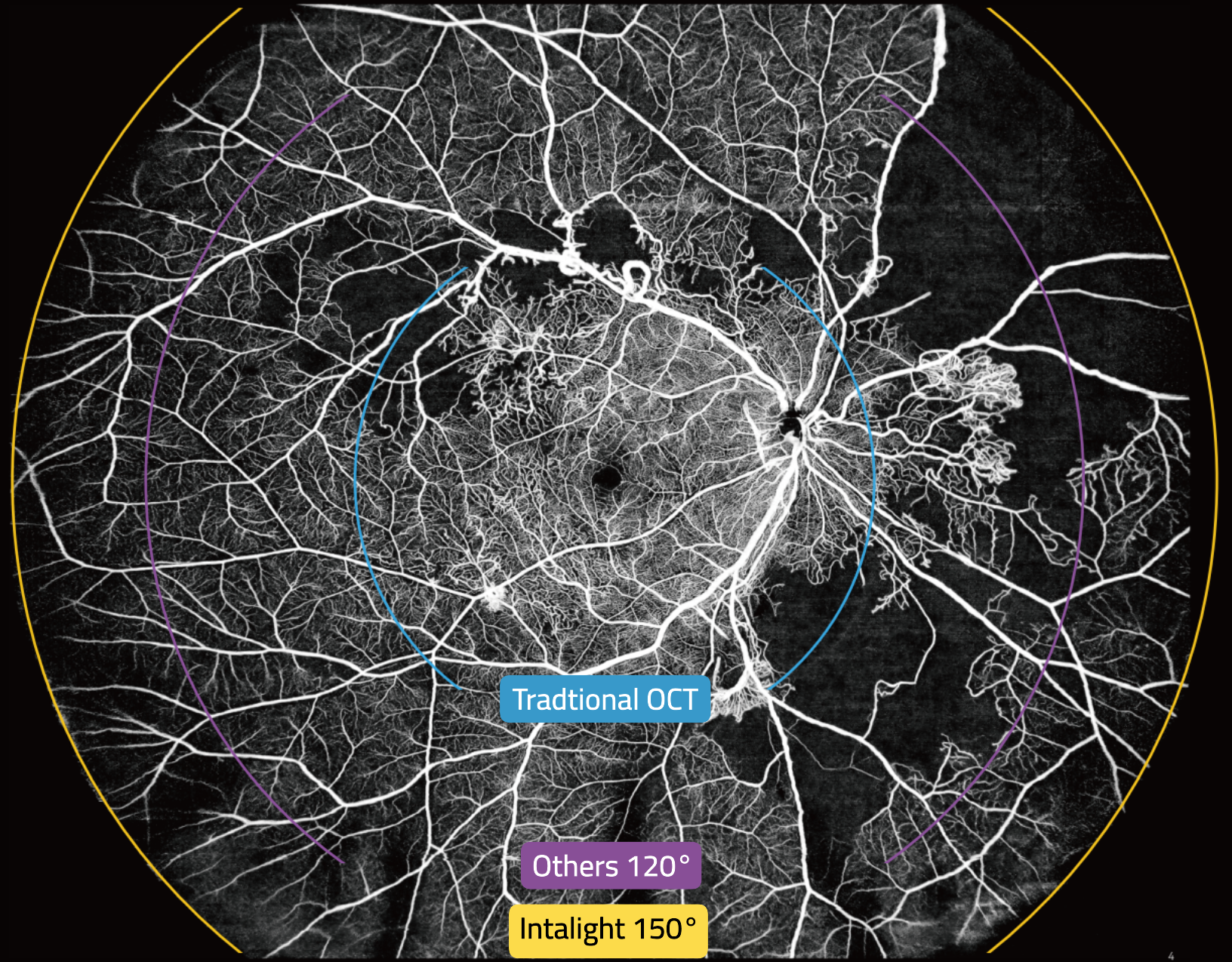
| Scan Range (Retina) | Without widefield lens: 83° (16 mm) With widefield lens: 150° (29 mm) | |
| Scan range (Anterior) | 20 mm | |
| OCTA Imaging | ||
| Scan Range (Retina) | Without widefield lens: 83° (16 mm) With widefield lens: 150° (29 mm) | |
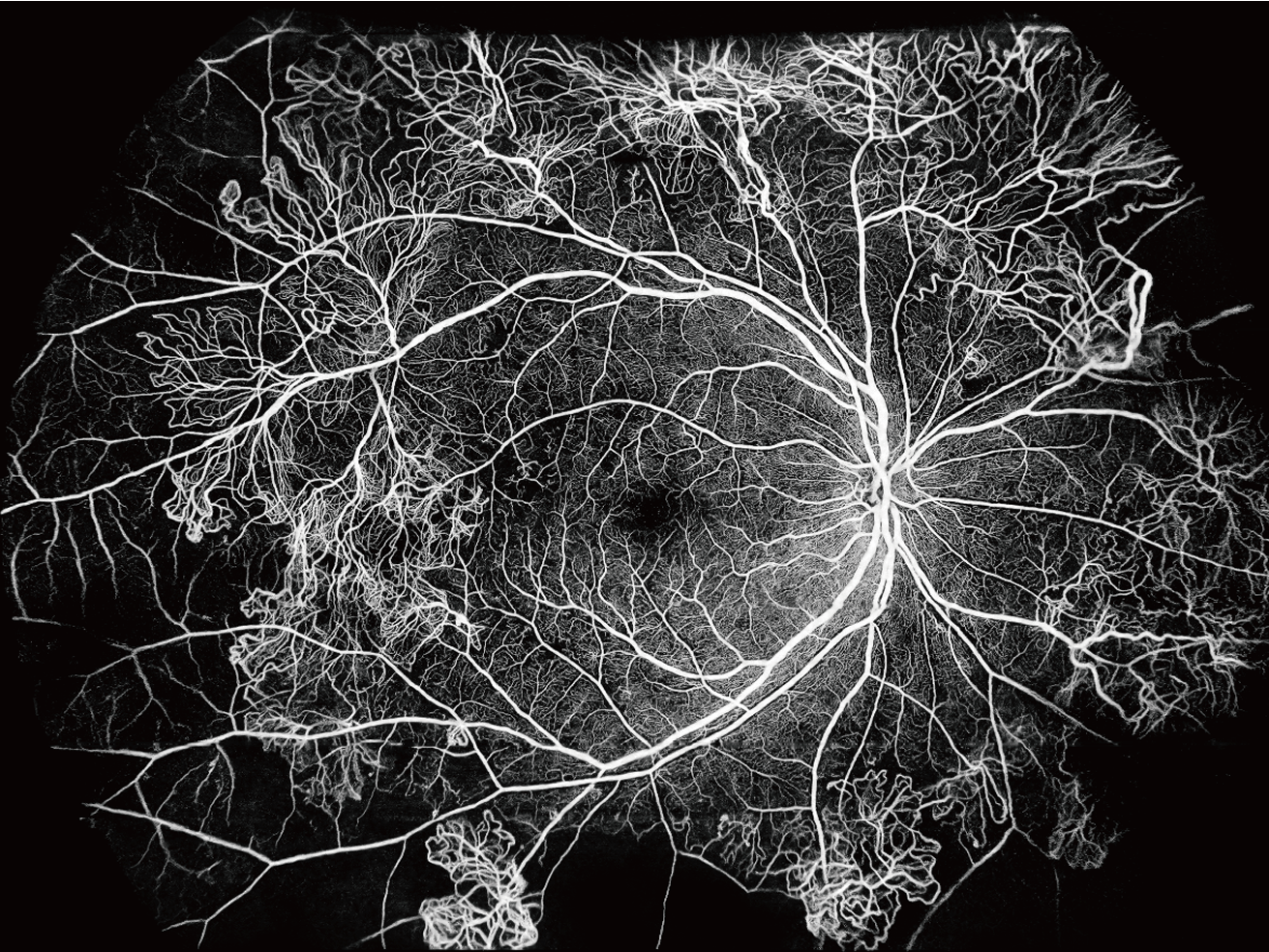
| OCTA montage | 250° (48 mm × 45 mm) | |
| Algorithm | TRUE Angio™ | |
| Fundus Imaging | ||
| Methodology | cSLO | |
| Optical source | SLD | |
| Wavelength | 830±20 nm | |
| Field of view | 106° × 106° | |
| Others | ||
| Range of refractive compensation | -33 D ~ +40 D | |
| Alignment | Automatic / Electrical | |
| Feature | Swept-Source OCT | Spectral-Domain OCT |
|---|---|---|
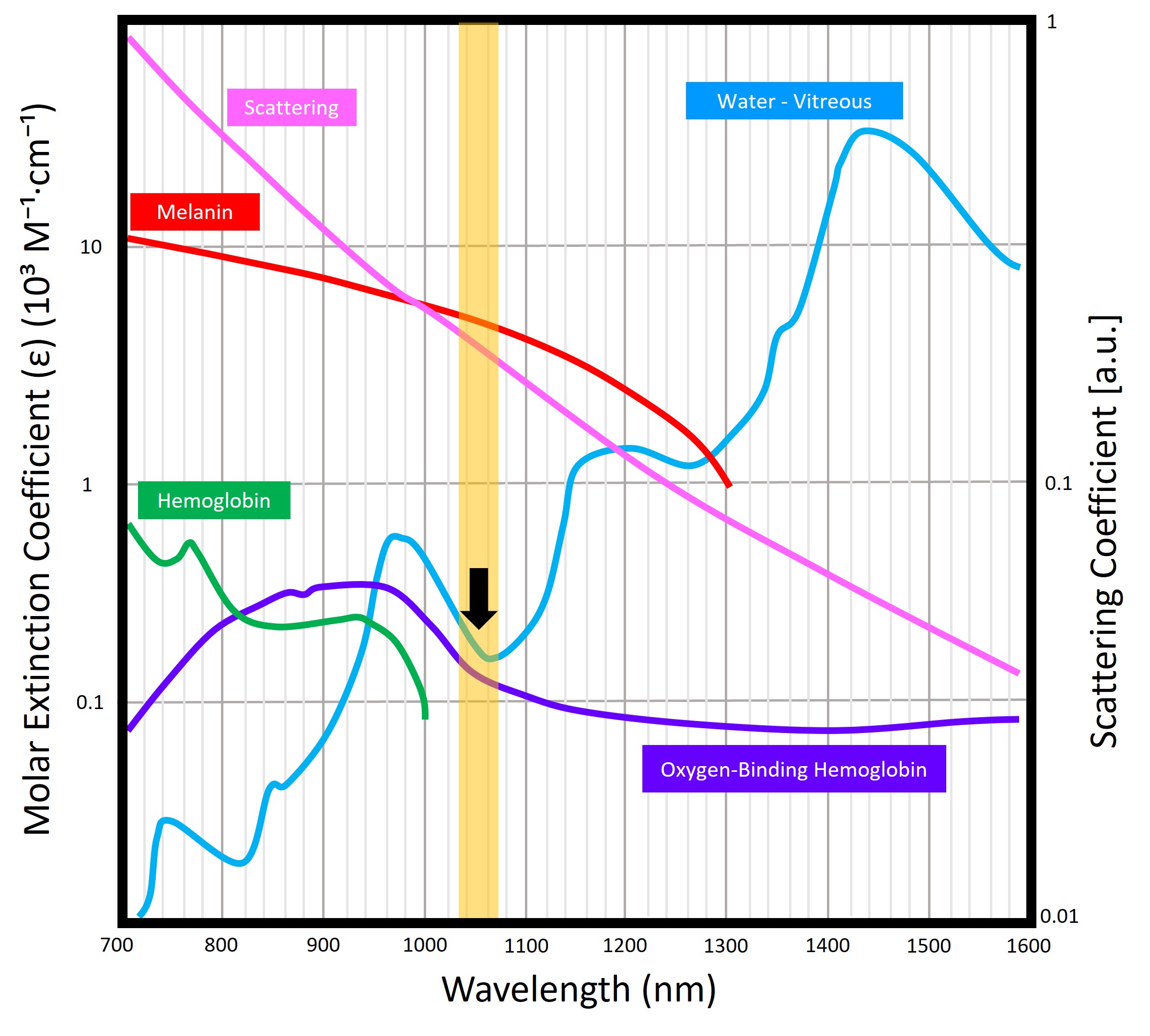
| Light Source | Uses a tunable laser around 1050 nm wavelength for deeper penetration and higher stability. | Uses a broadband super-luminescent diode (~840 nm), limited in depth and more affected by scattering. |
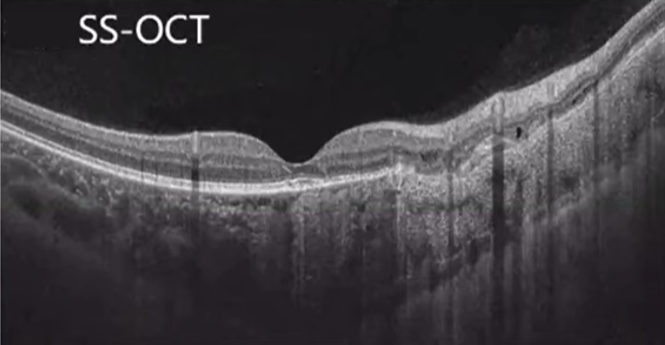
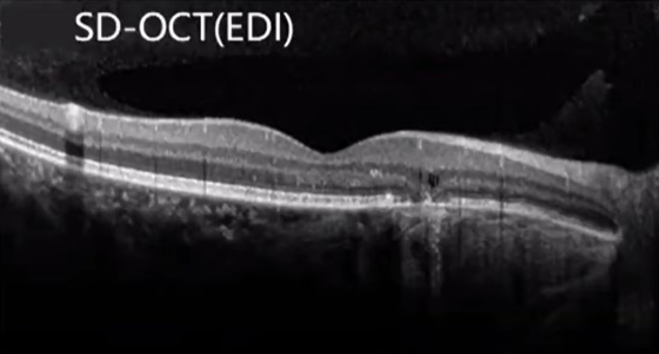
| Imaging Depth | Exceptional penetration through retinal pigment epithelium and into the choroid — visualizing deeper layers clearly. | Limited penetration; choroidal structures often indistinct or lost in shadow. |
| Scanning Speed | Much faster data acquisition, enabling quick, high-density scans with minimal motion artifacts. | Slower capture; longer scans often suffer from motion blur and patient discomfort. |
| Image Quality | Delivers consistent high-definition images across all tissue layers, even with cataracts. | Excellent for retinal surface imaging but signal quality drops with depth or opaque media. |
| Signal Stability | Laser source provides uniform signal strength throughout scans and across follow-ups. | Signal decays with depth; performance may vary over time. |
| Performance in Media Opacity | Penetrates through cataracts, corneal haze, or vitreous hemorrhage with minimal degradation. | More susceptible to scattering; image quality declines significantly in such conditions. |
| Measurement Reliability | Provides precise, repeatable quantitative data — ideal for long-term monitoring. | Reliable for superficial layers but less consistent for deep structures. |
| Technological Maturity | Represents the latest generation of OCT innovation; future-ready and expandable. | Older, well-established technology nearing its performance limits. |
| Maintenance & Calibration | Laser-based system offers better long-term stability and reduced recalibration. | Requires frequent calibration and periodic adjustments. |
| Clinical Advantage | Enables earlier disease detection, superior visualization, and greater diagnostic confidence. | Reliable for standard retinal scans but may miss subtle or deeper pathology. |
| Overall Value | Deeper • Faster • More Detailed • Future-Proof — the clear choice for advanced eye care. | Proven but technologically limited — less suitable for comprehensive imaging needs. |
Seven reasons it stands out in advanced retina imaging
VG200C is designed for clinics that need maximum speed and ultra-widefield OCT/OCTA — enabling faster acquisition, reduced motion artifacts, and broader peripheral evaluation with strong repeatability for follow-ups.

High-speed scanning minimizes motion artifacts and reduces capture time — especially helpful for difficult patients, busy clinics, and high-density widefield protocols.

Swept-source wavelength improves penetration and stability, supporting clearer imaging of deeper layers and better performance in challenging media conditions.

Expanded coverage helps evaluate peripheral pathology with fewer acquisitions — ideal for complex retina cases and comprehensive assessment.

Ultra-wide OCTA montage supports broader visualization of perfusion changes, ischemic zones, and vascular abnormalities — helping guide diagnosis and management.

Consistent acquisition quality supports reliable longitudinal monitoring and treatment-response evaluation, improving confidence across repeat visits.

Combine essential imaging modalities in one device to streamline workflow, reduce device switching, and support complete clinical documentation.

With 400 kHz speed and wide coverage (150° OCT and 250° OCTA montage), VG200C is built for advanced diagnostics, widefield protocols, and scalable clinical throughput — while maintaining strong imaging consistency for long-term care.